Artists · Orthodox text

Orthodox Ketubah Artists

25 artists whose own studios offer an Orthodox (traditional Aramaic) ketubah text, 8 of them in Israel. Every one is listed with real work, credited and linked, so you can commission directly.

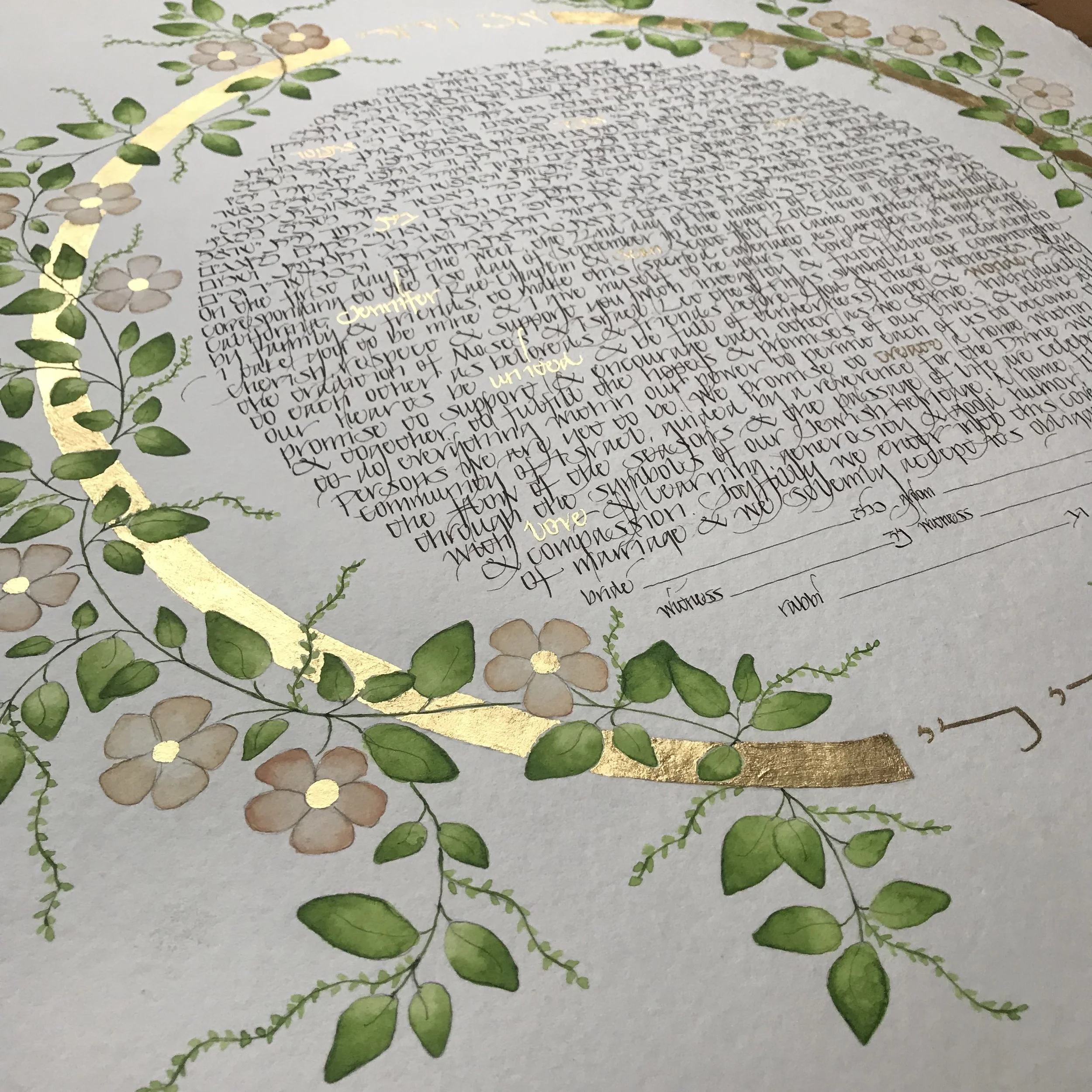
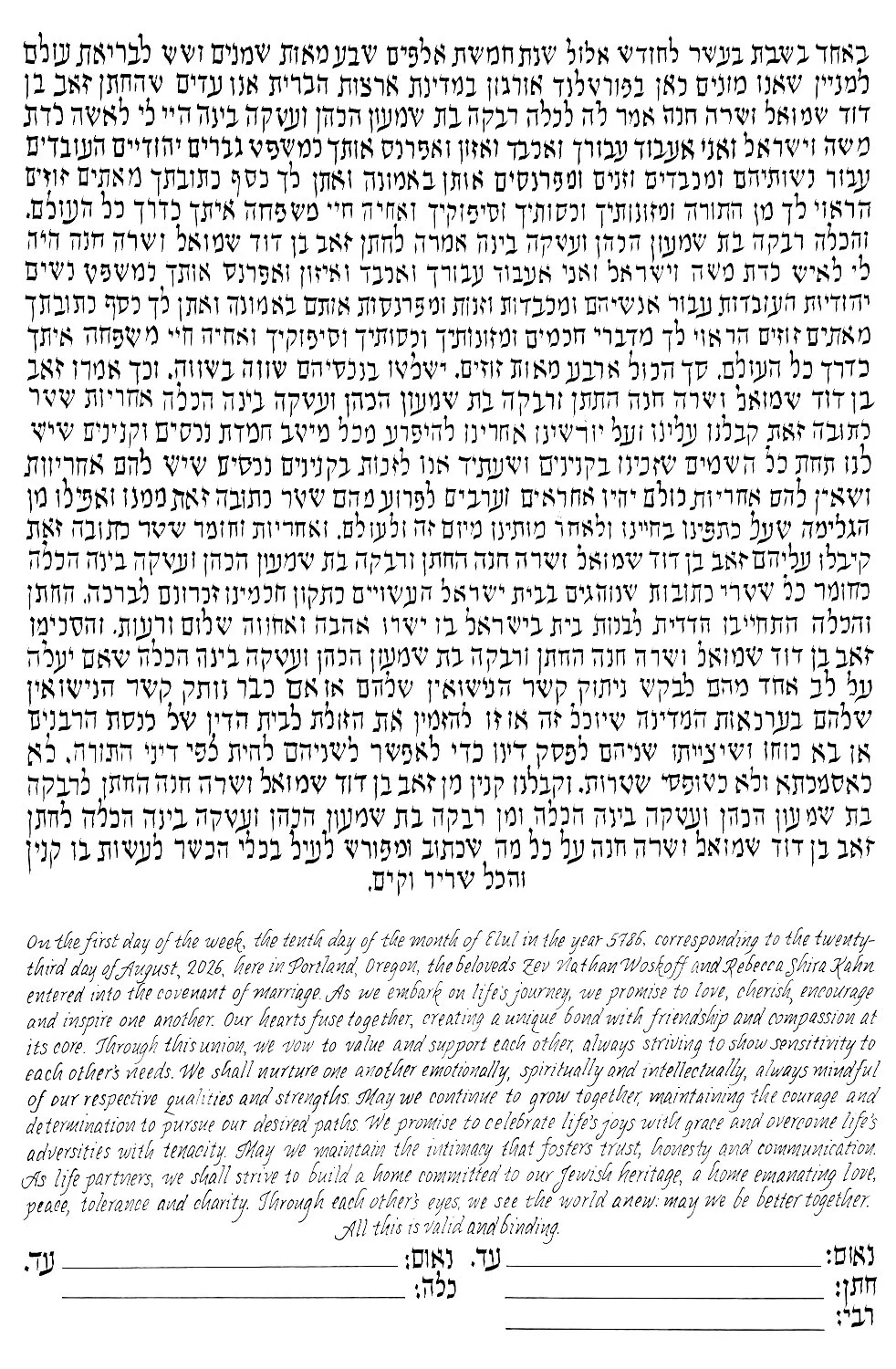
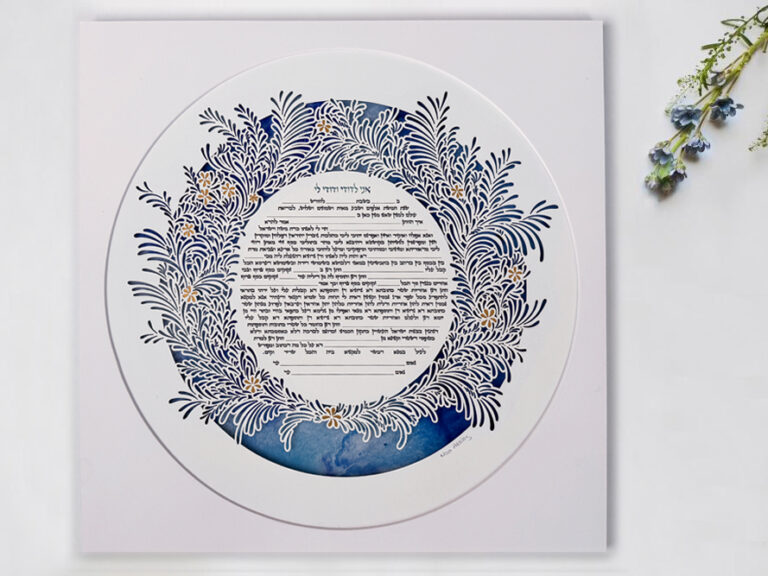
For an Orthodox wedding, the ketubah text matters more than the art. You need the traditional Aramaic text, in the Ashkenazi or Sephardi version your rabbi uses, with the names, date and place filled in correctly and room for two kosher witnesses to sign. The artists below all offer that text. If you want the text written by hand, start with Jamie Shear, Noa Baranes, Ketubah Graphia (Aliza Boyer) and Mordechai Pinchas.

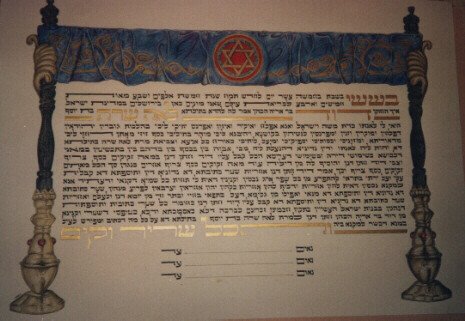
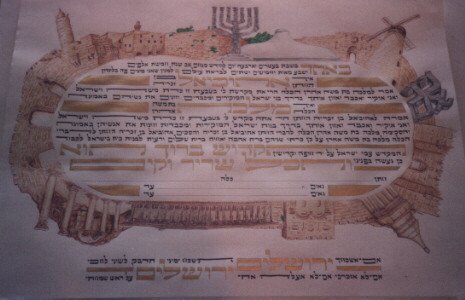
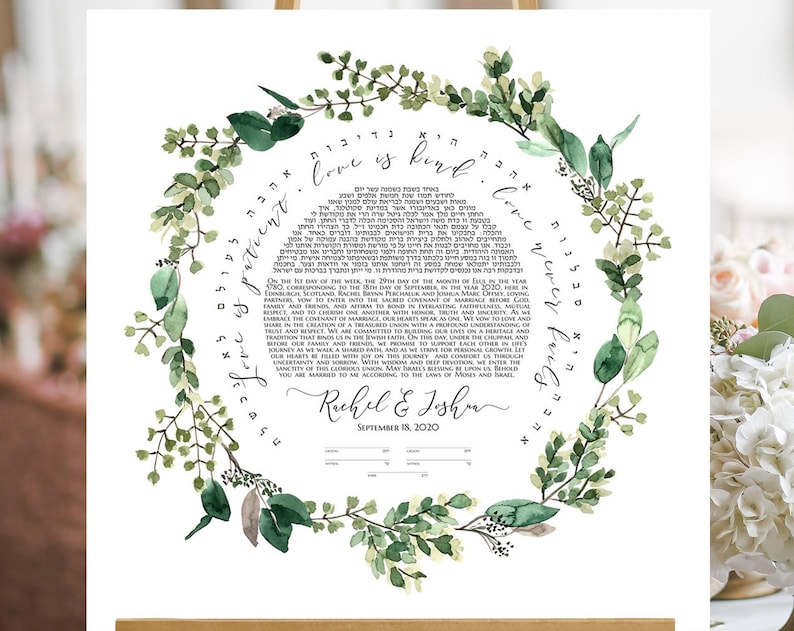
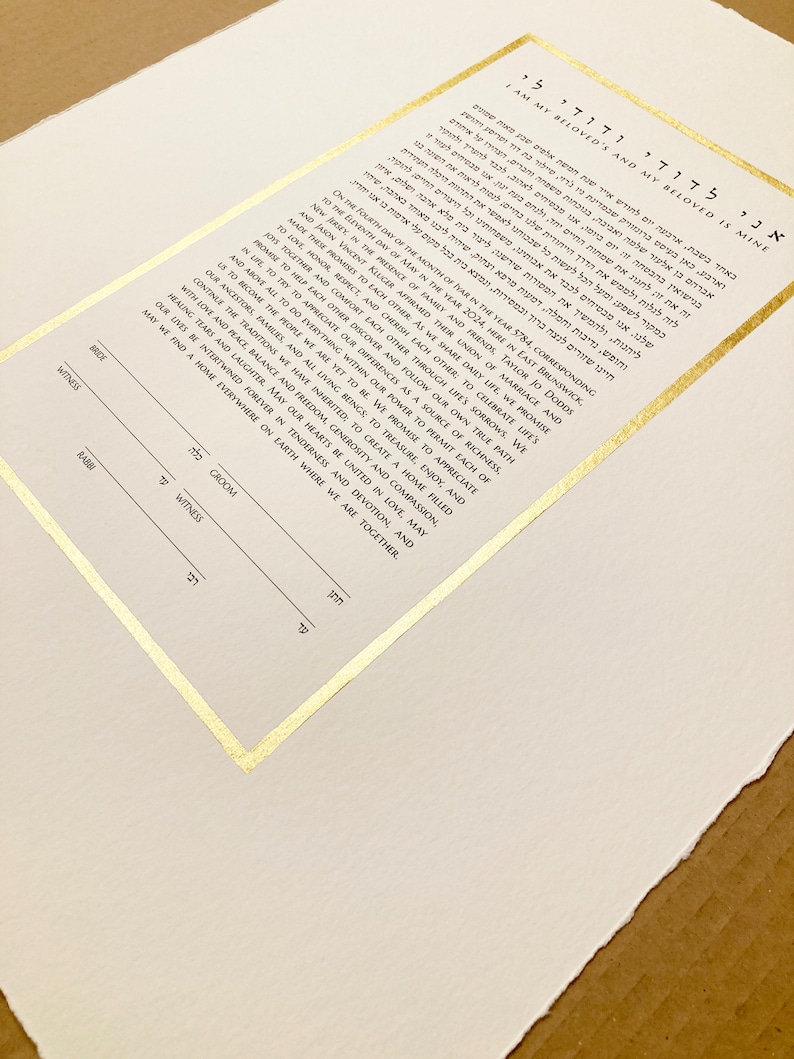
Choose the design you love, then send the artist the exact details your rabbi gives you and ask for a proof. Many Orthodox couples pick floral, Jerusalem, papercut or traditional illuminated designs. Read how the wording differs by community in our Orthodox ketubah text guide.

What to confirm with the artist

Which text version

Ashkenazi or Sephardi, first marriage or not, and any community detail such as Chabad or Moroccan custom.

Who fills in the details

Whether the artist prints the names and date, letters them by hand, or leaves them for your rabbi or a scribe.

Proof and timing

A proof for your rabbi to check before it is printed or lettered, and delivery well before the wedding.

25 artists
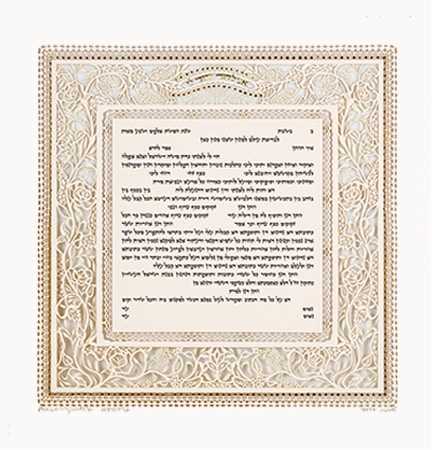
Ornate papercut ketubah with symmetrical border and warm gold detailing by Danny AzoulayContemporary ketubah with painted floral motifs and hand lettering by Danny AzoulayKetubah in blue tones with Jerusalem-inspired ornament by Danny Azoulay

Danny Azoulay

Jerusalem, Israel

Trained at Jerusalem's Bezalel Academy, Danny Azoulay works in hand-cut paper, painting, and gold leaf to create ketubahs rooted in classical Jewish ornament. His studio has produced marriage contracts for couples on every continent, each one built around detailed papercut borders and luminous color.

Orthodox textPapercutTraditionalJerusalem & Landscapes$$$
Colorful watercolor ketubah with two intertwining trees by Anna AbramzonWatercolor ketubah of two hearts growing into one tree by Anna AbramzonKetubah with softly painted pink peonies by Anna Abramzon

Anna Abramzon

United States

Anna Abramzon runs a boutique studio she describes as contemporary art with a Jewish soul. Her ketubahs are painterly and modern, full of movement and warm color, and she paints custom pieces alongside a signed collection of prints for couples worldwide.

Orthodox textWatercolorModernFloral & Botanical$$
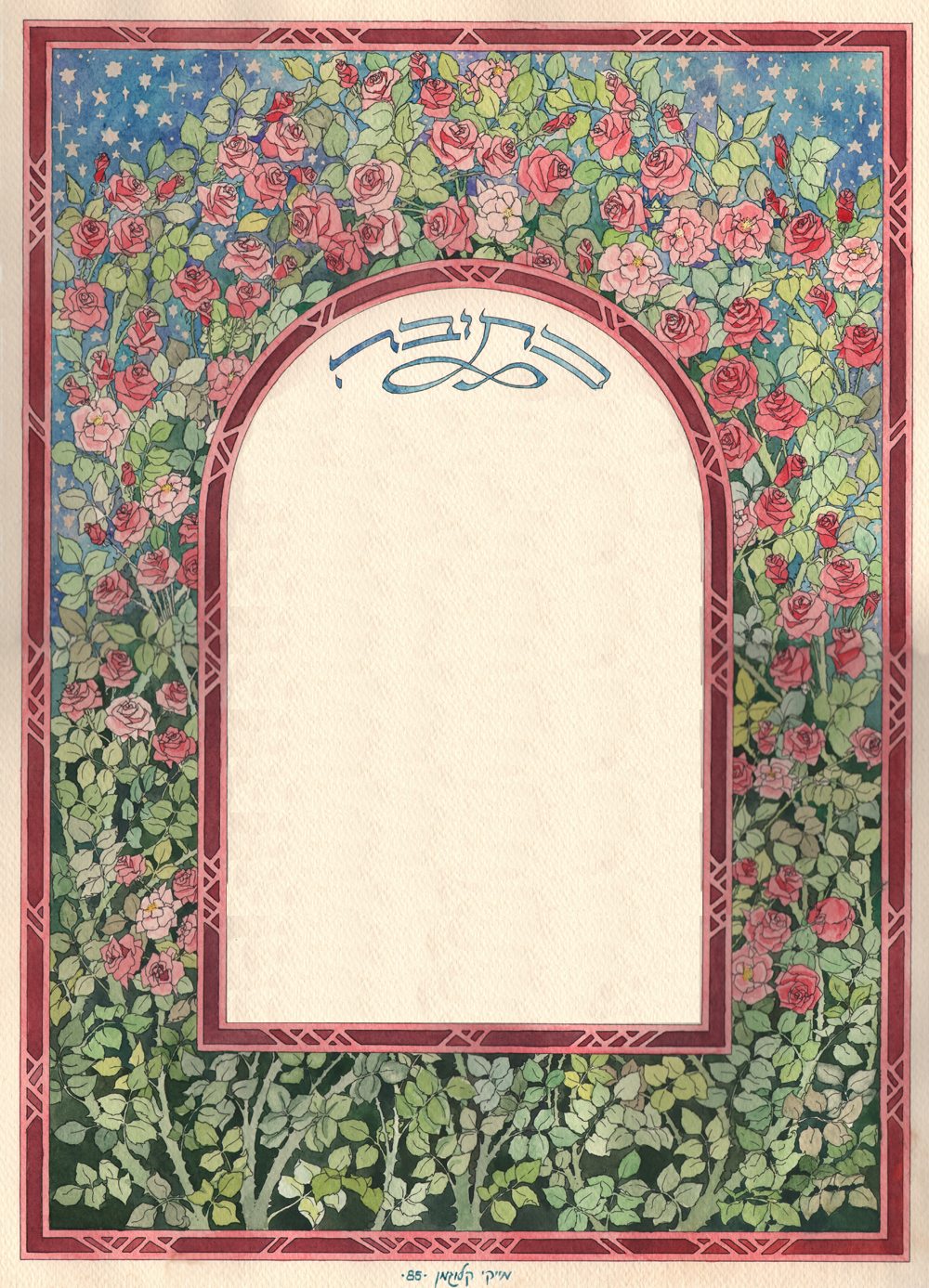
Roses ketubah with painted rose border by Mickie CaspiBlue Vine ketubah with trailing painted vines by Mickie CaspiHuppah ketubah in ocher tones by Mickie Caspi

Mickie Caspi

Newton, Massachusetts, United States

Mickie Caspi has been designing Judaica and ketubahs for decades, working in watercolor, gouache, pen and ink, and gold leaf. Her contracts lean traditional and finely lettered, with border ornament that echoes historic illuminated manuscripts.

Orthodox textTraditionalWatercolorFloral & Botanical$$
Celestial Rings ketubah with hand lettering by Stephanie CaplanGold band ketubah built around hand calligraphy by Stephanie CaplanSpring Vines ketubah with painted vine border by Stephanie Caplan

Stephanie Caplan

United States

Stephanie Caplan blends silk painting, watercolor, collage, and calligraphy into ketubahs with a soft, luminous quality. Her work feels handmade and personal, and she collaborates closely with couples on custom color and text.

Orthodox textWatercolorModernFloral & Botanical$$
Abstract Waves papercut ketubah by Adriana SaipeEncircled Color Wash ketubah with a soft circular wash by Adriana SaipeStar Map ketubah showing a night sky over a city by Adriana Saipe

Adriana Saipe

United Kingdom

Adriana Saipe works under the studio name Ink With Intent, creating modern, minimalist ketubahs in watercolor, ink, and digital art. Her designs are calm and contemporary, with plenty of open space and gentle color.
Orthodox textMinimalistModernWatercolor$$
Papercut ketubah built around a prayer shawl motif by Pamela Feldman-HillSong of Songs papercut ketubah with cut lettering and border by Pamela Feldman-HillSeven Species papercut ketubah with wheat, grapes and figs by Pamela Feldman-Hill

Pamela Feldman-Hill

United States

Pamela Feldman-Hill has been making ketubot and Judaic art since 1980, working in papercut, painting and print under the Pearl Editions imprint. The ketubah collection runs from finely cut papercuts to painted borders drawn from Jewish ritual objects and the landscape of Israel.

Orthodox textPapercutTraditionalJerusalem & Landscapes$$
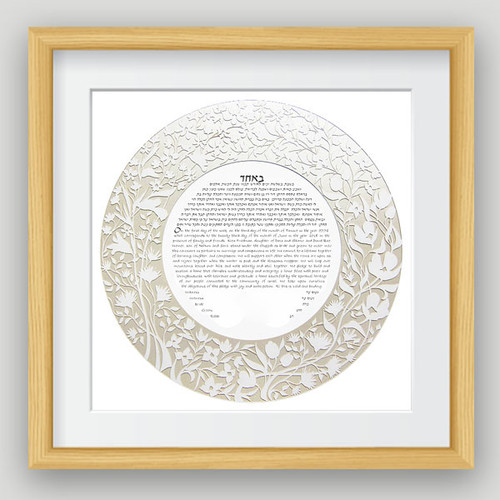
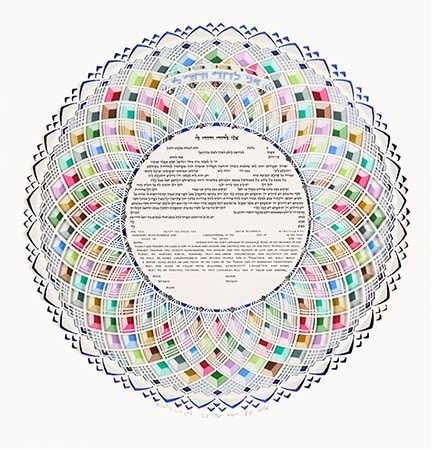
Circular papercut ketubah with wildflower border by Jennifer RaichmanCircular papercut ketubah with fine sprig detailing by Jennifer RaichmanCircular papercut ketubah with geometric cut pattern by Jennifer Raichman

Jennifer Raichman

United States

Jennifer Raichman designs laser-cut papercut ketubot in circular and framed formats, layering cut paper over color. The look is graphic and contemporary, with wildflowers, lace leaves and geometry doing the work that painted borders once did.
Orthodox textPapercutModernMinimalist$$
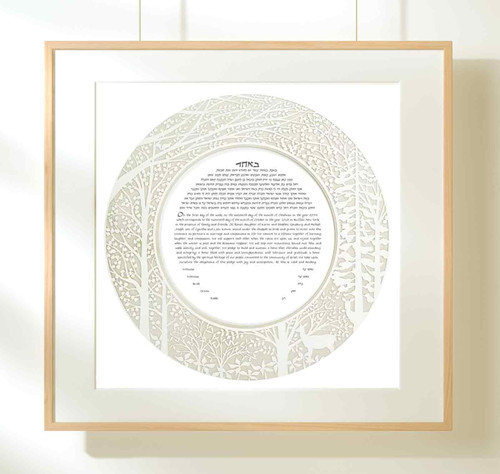
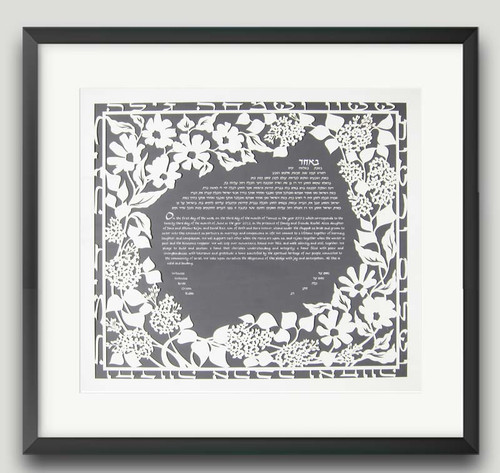
Layered papercut Forest ketubah in opal tones by Melanie DankowiczLilac floral layered papercut ketubah in gray and white by Melanie DankowiczGarden ketubah cut in layered paper with opal background by Melanie Dankowicz

Melanie Dankowicz

United States

Melanie Dankowicz builds ketubot as layered papercuts, cutting multiple sheets and stacking them so the text sits inside a shallow relief of trees, vines and blossom. Colorways run from opal and silver to deep plum, and custom commissions are a large part of the studio's work.

Orthodox textPapercutFloral & BotanicalModern$$
Watercolor ketubah with pomegranate and eucalyptus border by Yelena MirchevskayaAutumn wreath ketubah painted in warm watercolor by Yelena MirchevskayaLemon branch ketubah in soft watercolor by Yelena Mirchevskaya

Yelena Mirchevskaya

United States

Yelena Mirchevskaya paints the ketubot behind Studio Yarden in watercolor, with Mediterranean color and a clean, uncluttered layout. Pomegranates, eucalyptus and lemon branches recur, finished on archival paper with gold leaf detailing.

Orthodox textWatercolorFloral & BotanicalMinimalist$$$
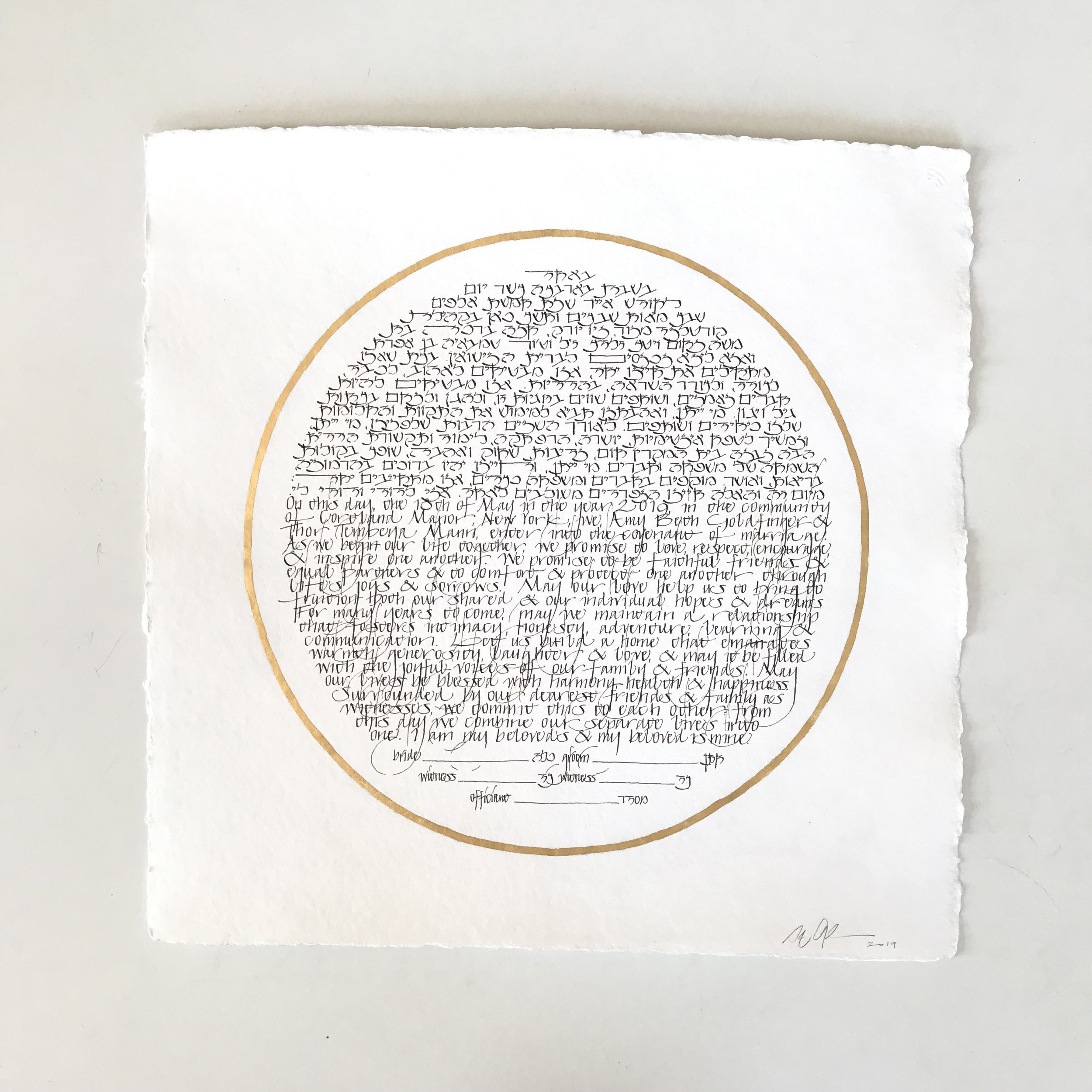
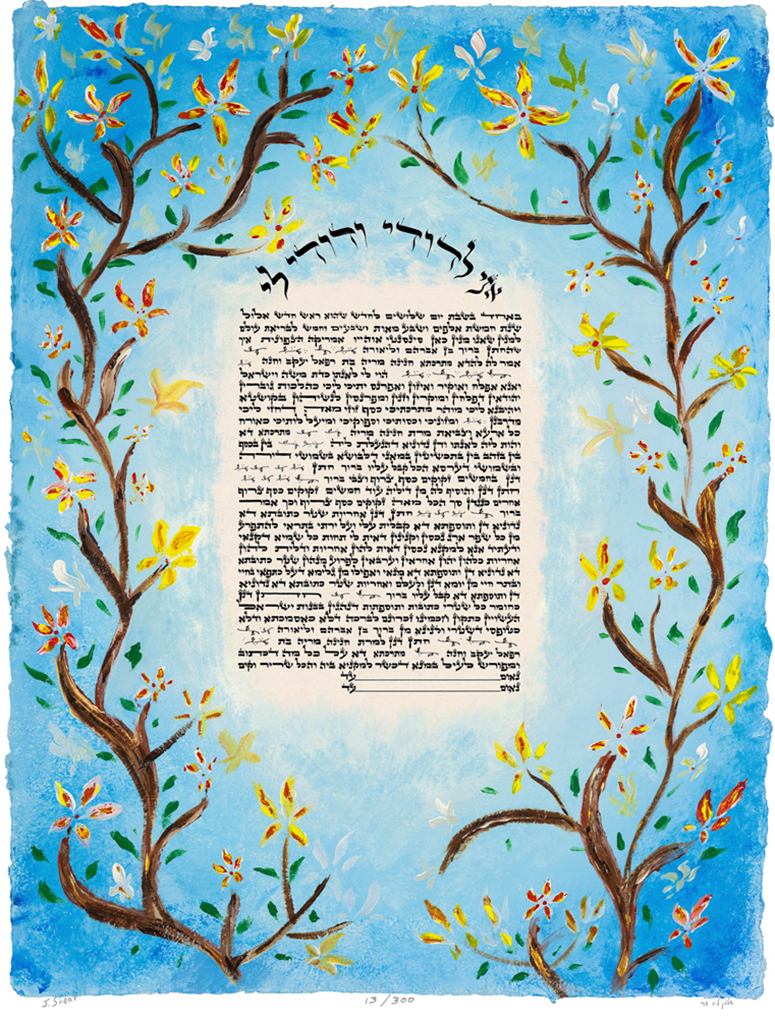
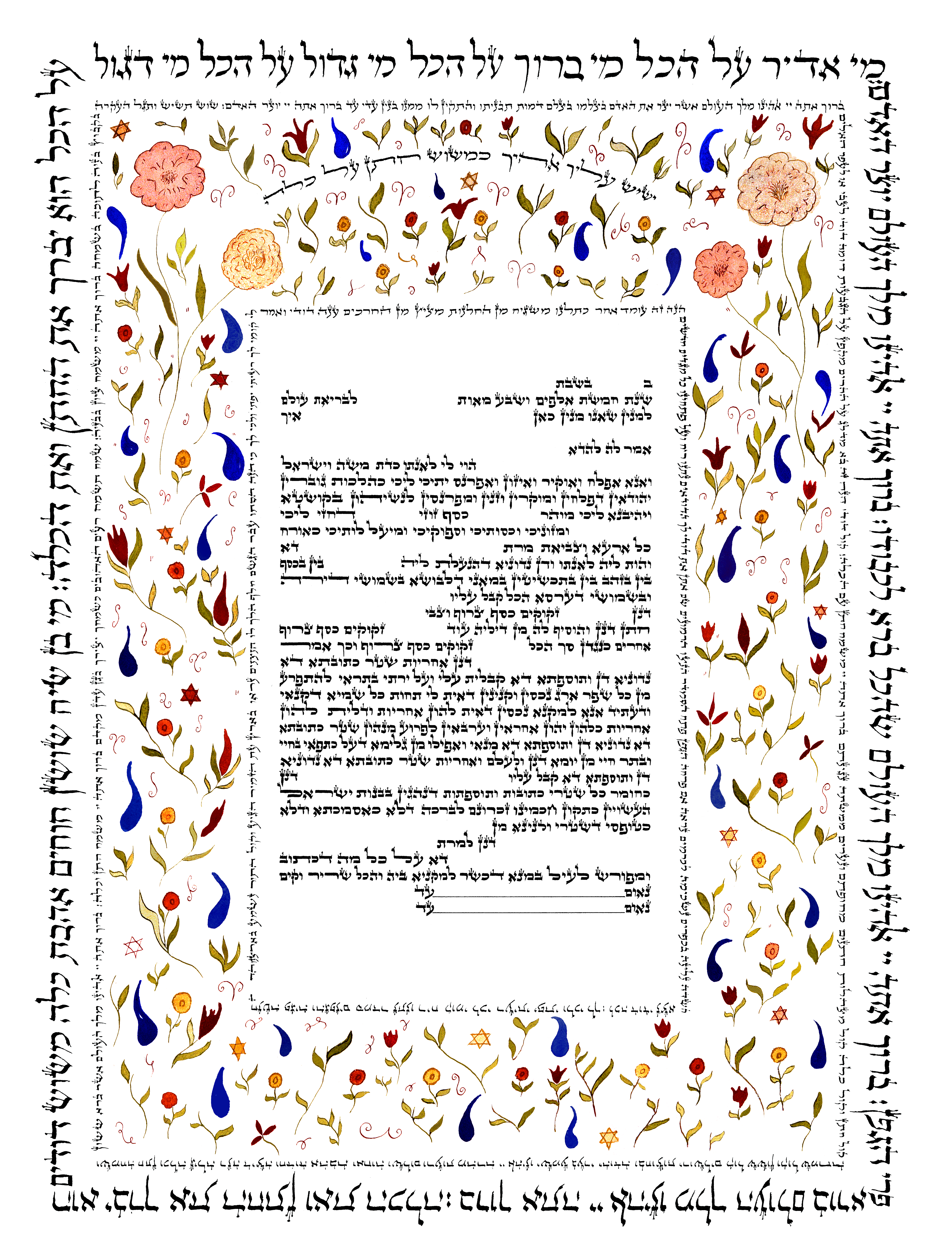
Almond Blossom ketubah with scribal lettering by Jamie ShearPaisley ketubah with micrography ornament by Jamie ShearSukat Shalom ketubah with scribal Hebrew lettering by Jamie Shear

Jamie Shear

Jerusalem, Israel

Jamie Shear is a Torah scribe and artist who has lived in Jerusalem since 2005 and has written twelve Torah scrolls for communities around the world. Through his Ktavtam studio he writes ketubot to halachic standards and decorates them with micrography, forming ornament out of the letters themselves.

Orthodox textTraditionalJerusalem & LandscapesMinimalist
Bridal Lace laser-cut ketubah by KetubataBlue Hydrangea Rhombus ketubah with floral border by KetubataEucalyptus Hamsa ketubah fine art print by Ketubata

Ketubata

Israel

Ketubata was founded in 2016 by Dalia Ben-Moshe, a Central Saint Martins graduate, and has grown into one of the busier contemporary ketubah studios. The collection leans on laser-cut lace, mosaic and mandala patterning, with Orthodox, Reform and interfaith texts all available.

Orthodox textPapercutModernFloral & Botanical$$
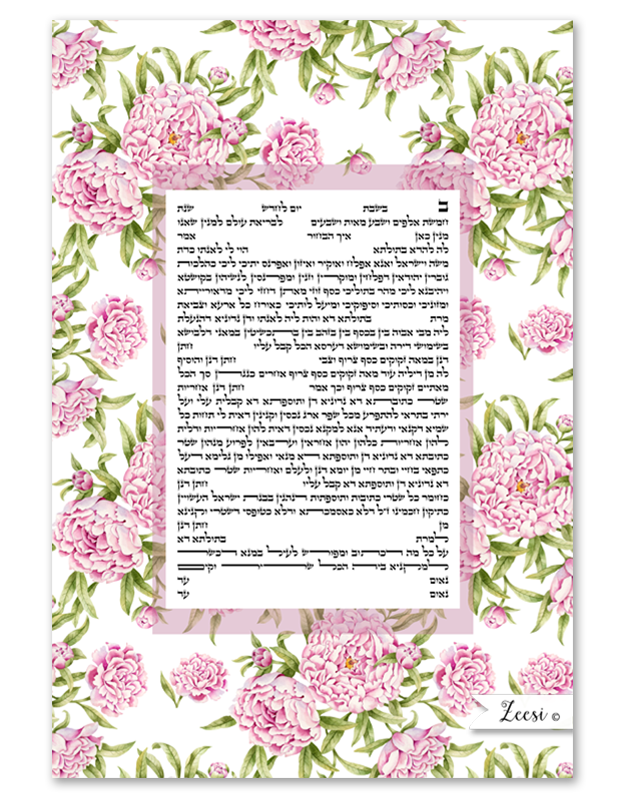
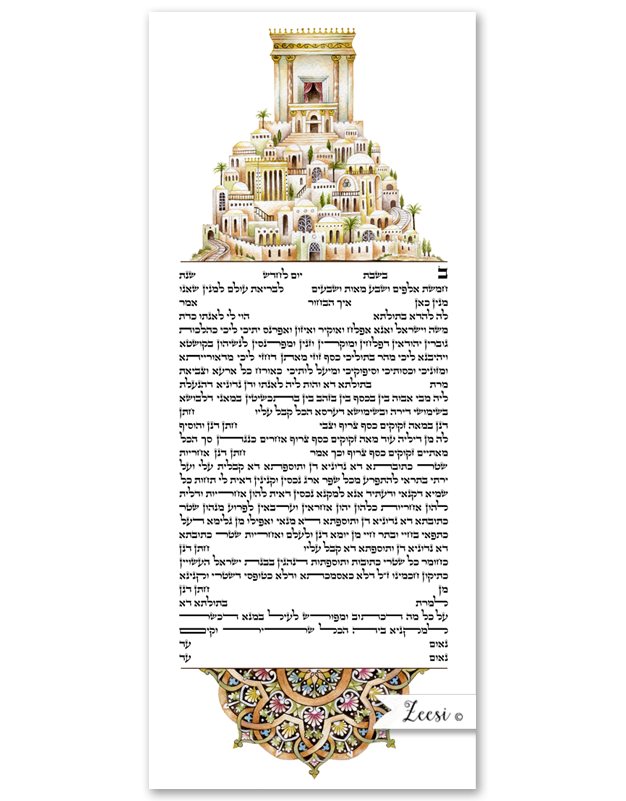
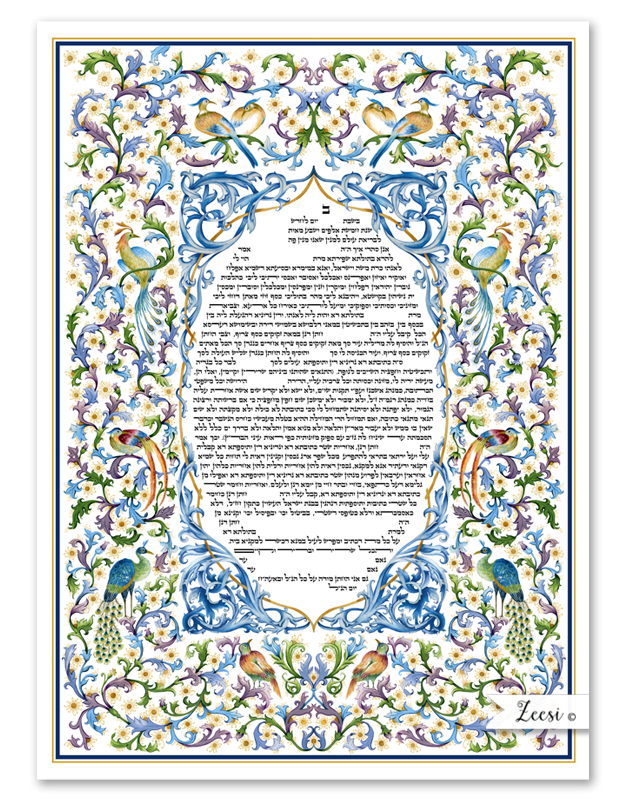
Pink peony border framing a Hebrew and Aramaic ketubah text by Zeesi PaltrowitzKetubah crowned with a painted view of Jerusalem and the Temple by Zeesi PaltrowitzIlluminated ketubah with a blue Florentine scroll border by Zeesi Paltrowitz

Zeesi Paltrowitz

Jerusalem, Israel

Zeesi works from Jerusalem under the name Illuminations from Jerusalem, painting richly patterned floral and Jerusalem ketubot in the manner of an illuminated manuscript. Designs are personalized with Orthodox Ashkenazi or Sephardic texts, and couples can match them with benchers and wedding invitations from the same studio.

Orthodox textFloral & BotanicalTraditionalJerusalem & Landscapes
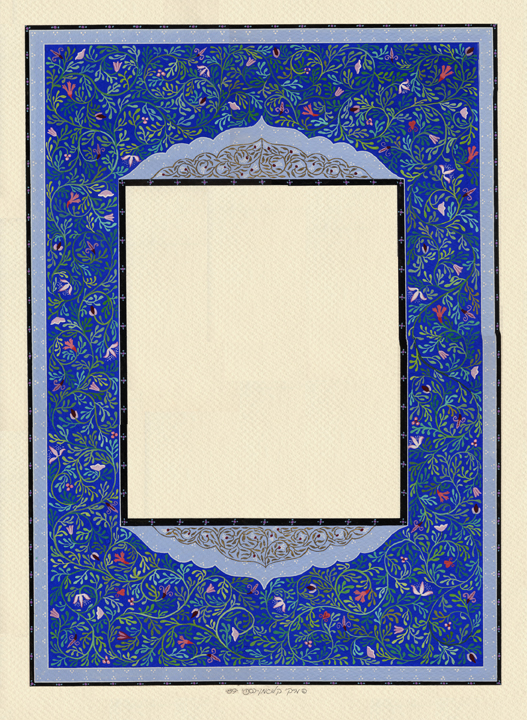
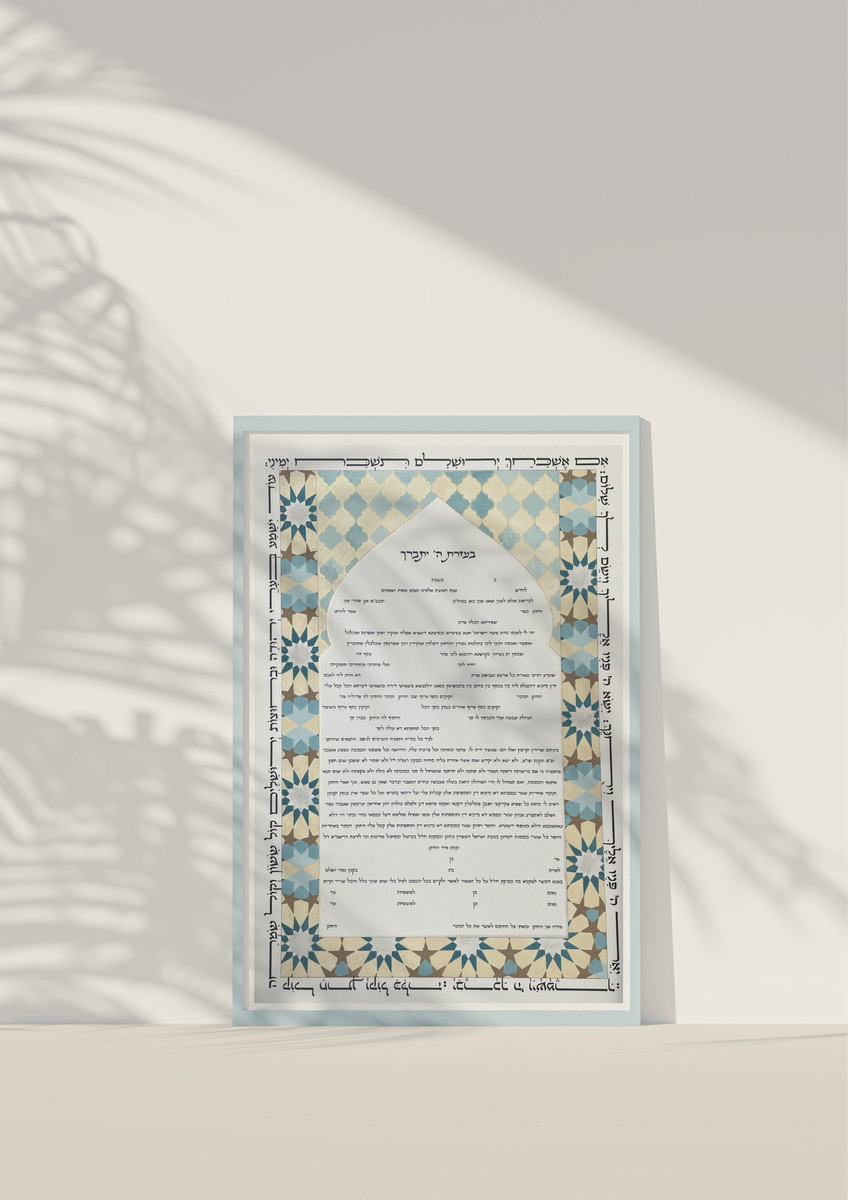
Hand-painted ketubah with a Moroccan tile border in blue and gold by Noa BaranesKetubah under a painted Moroccan arch with blue floral vines by Noa BaranesFramed ketubah with a teal and gold geometric arch by Noa Baranes

Noa Baranes

Israel

Noa Baranes is an Israeli Hebrew calligrapher and Judaica artist whose ketubot borrow the arches and tilework of Moroccan design, painted in gouache with gold. Couples can choose a fully handwritten and hand-painted piece, hand-painted borders around a printed text, or a digital file, and the text follows halacha.

Orthodox textTraditionalFloral & BotanicalWatercolor$$$
Fifteen-layer white papercut ketubah with a star-pattern border by Ruth BeckerTwenty-six-layer papercut ketubah with a sculpted petal ring by Ruth BeckerLayered blue lotus papercut ketubah with the text in a central circle by Ruth Becker

Ruth Becker

United States

Ruth Becker builds ketubot from many layers of hand-cut paper, from 12 to 26 in a single piece, so the border rises off the wall like a relief sculpture around the text. Designs range from Islamic-inspired star patterns to lotus and spiral forms, and texts are offered in Hebrew and English, Orthodox included.

Orthodox textPapercutModernMinimalist$$$
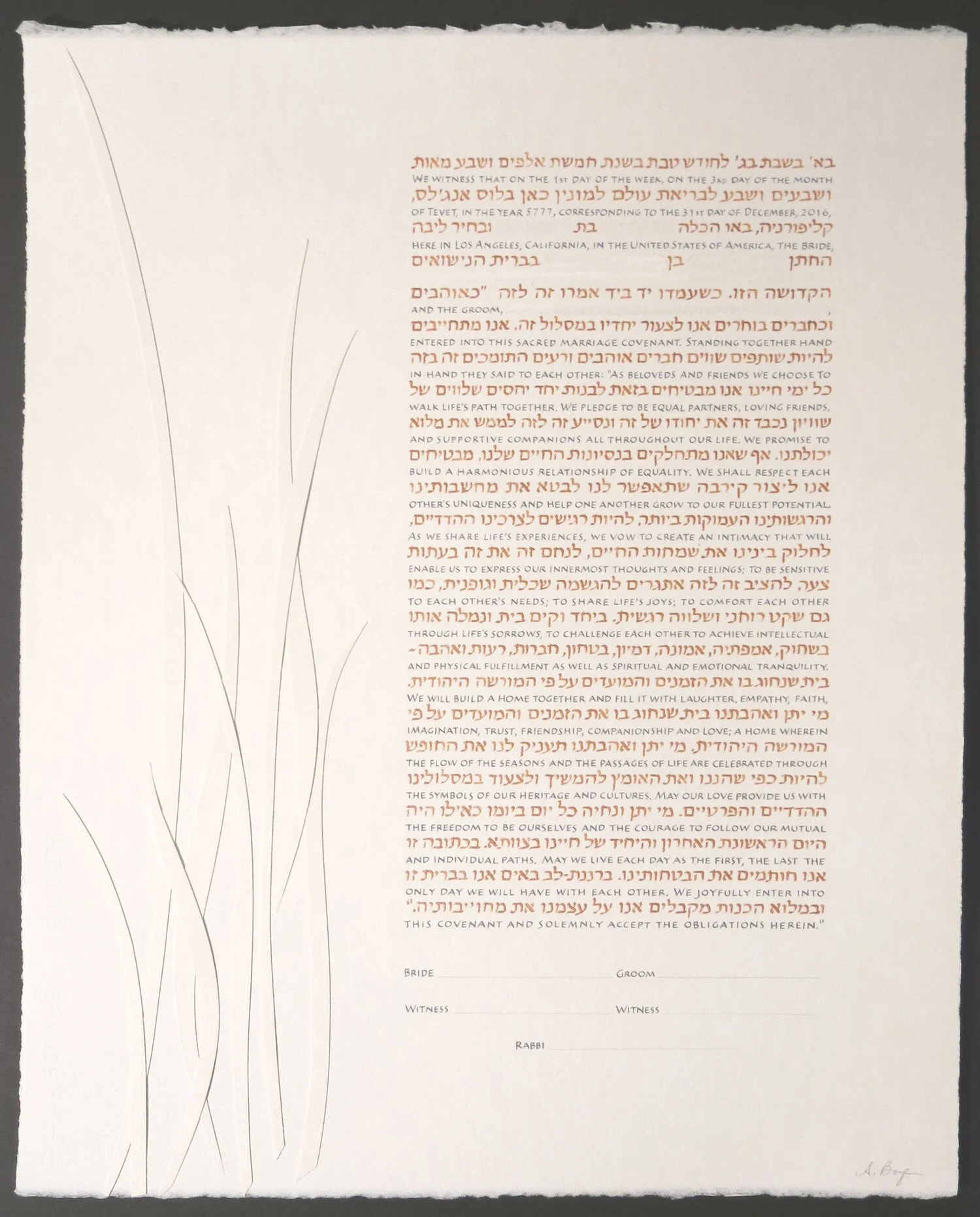
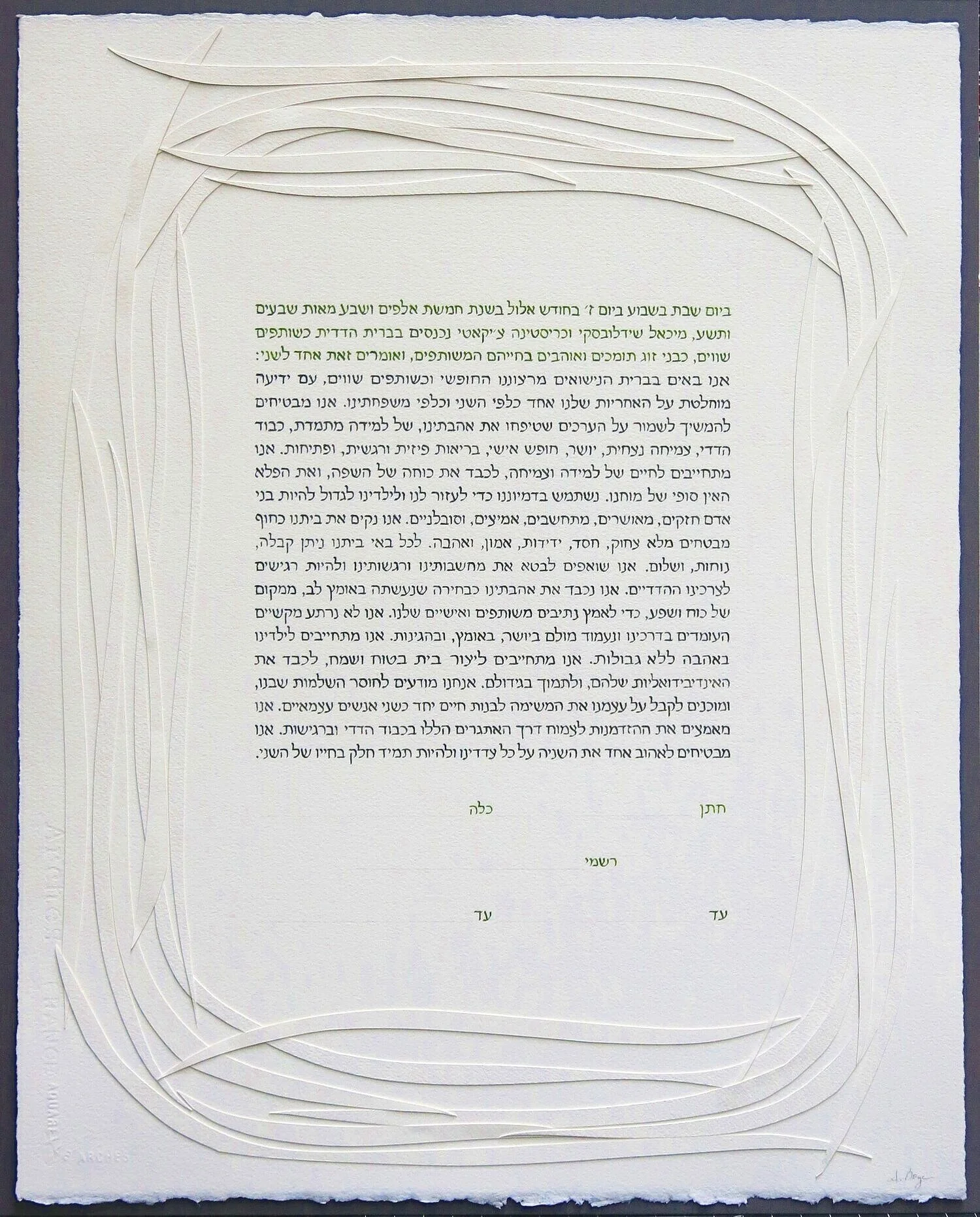
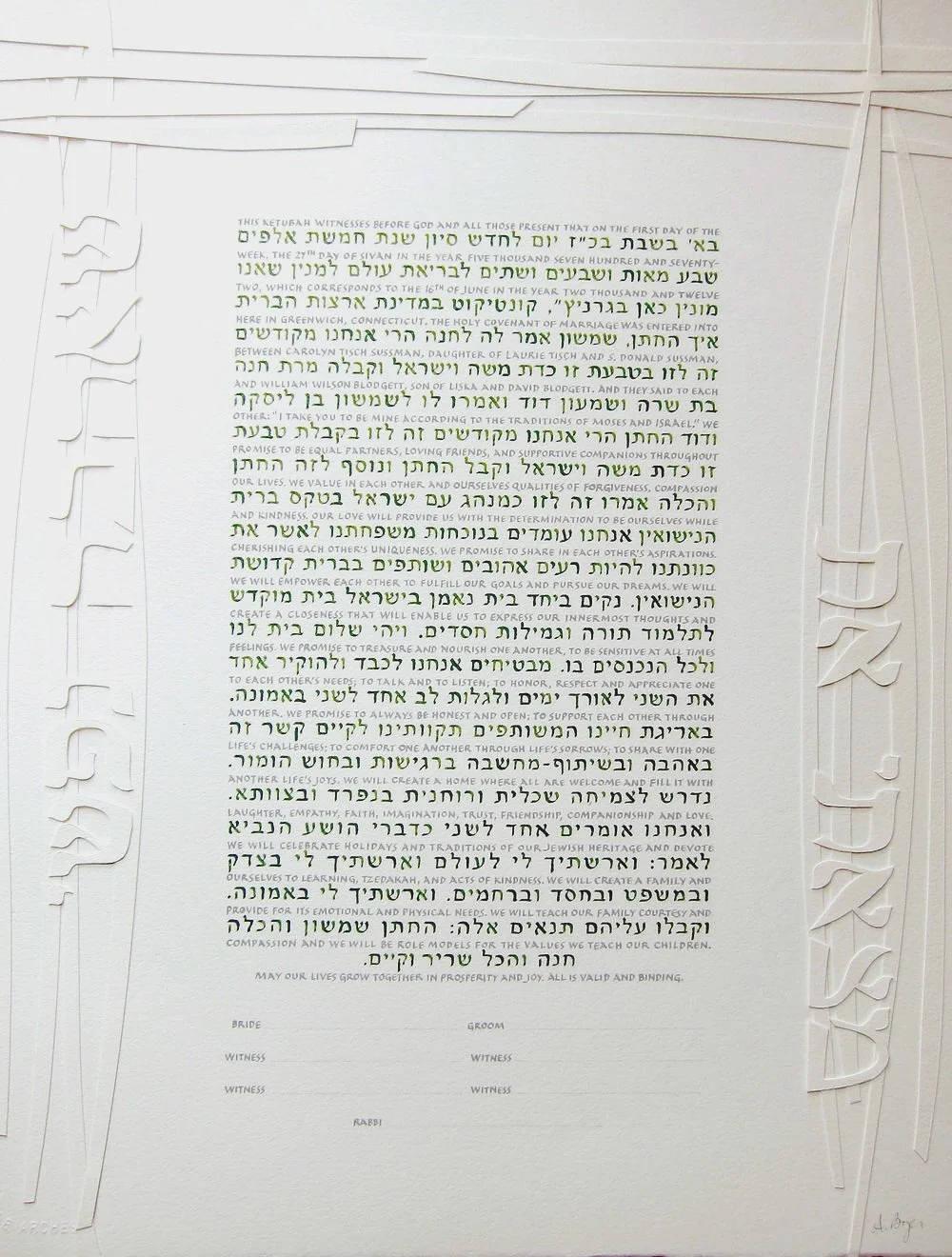
Hand-lettered Hebrew and English ketubah with fine vertical garden lines by Ketubah GraphiaHand-lettered ketubah with a raised white border on deckle-edged paper by Ketubah GraphiaHebrew ketubah with a chuppah canopy border and lettered phrases by Ketubah Graphia

Ketubah Graphia (Aliza Boyer)

Brooklyn, United States

Ketubah Graphia is the Brooklyn studio of Aliza Boyer, who hand-letters every ketubah to order and frames the text with delicate, hand-worked borders on fine paper. The texts span Orthodox, Conservative, Reform, interfaith and gender-neutral options, and Aliza will letter in other languages too.

Orthodox textMinimalistTraditionalModern$$$
Tree of Life hand-painted watercolor ketubah by Rachelle TchiproutOlive Wreath hand-painted watercolor ketubah by Rachelle TchiproutSerenity watercolor ketubah with a quiet palette by Rachelle Tchiprout

Rachelle Tchiprout

Israel

Rachelle Tchiprout paints hand-finished watercolor ketubahs from her studio in Israel under the name The Delicate Brush. Her designs are gentle and floral, available both as fine-art prints and fully hand-painted originals.

Orthodox textWatercolorFloral & BotanicalMinimalist$$
Nineteen-layer three-dimensional papercut ketubah titled Cubes by Noam ShargorodskyThree-dimensional papercut ketubah with an infinity design by Noam ShargorodskyPapercut ketubah featuring the Hebrew word Ahava, meaning love, by Noam Shargorodsky

Noam Shargorodsky

Jerusalem, Israel

Jerusalem-born artist Noam Shargorodsky creates handmade ketubahs using oils, watercolors, and 23k gold leaf under the studio name Ketubahome. Her pieces draw on Jewish texts and Israeli landscapes, with Jerusalem, the Old City, and the Western Wall recurring throughout her work.

Orthodox textPapercutJerusalem & LandscapesTraditional$$$
Custom illuminated ketubah with painted border and hand lettering by Judith JosephHand-lettered custom ketubah with calligraphy and painted ornament by Judith JosephDetail of hand-lettered Hebrew ketubah calligraphy by Judith Joseph

Judith Joseph

Chicago, United States

Judith Joseph is a painter, calligrapher and printmaker whose ketubot are built in egg tempera, india ink and watercolor on ragboard. The work takes cues from illuminated manuscripts, folklore and each couple's own story, and every text is lettered by hand.

Orthodox textTraditionalFloral & BotanicalWatercolor$$$
Silver palm papercut ketubah by Noa AttiasEnchanted Garden papercut ketubah with layered foliage by Noa AttiasHandmade papercut ketubah with gold leaf detailing by Noa Attias

Noa Attias

Hasmonaim, Israel

Noa Attias makes handmade papercut ketubot in Hasmonaim, finishing many of them with 24K gold leaf. The wider Judaica range runs well beyond the ketubah, and the same cut-paper vocabulary carries through all of it.

Orthodox textPapercutFloral & BotanicalJerusalem & Landscapes
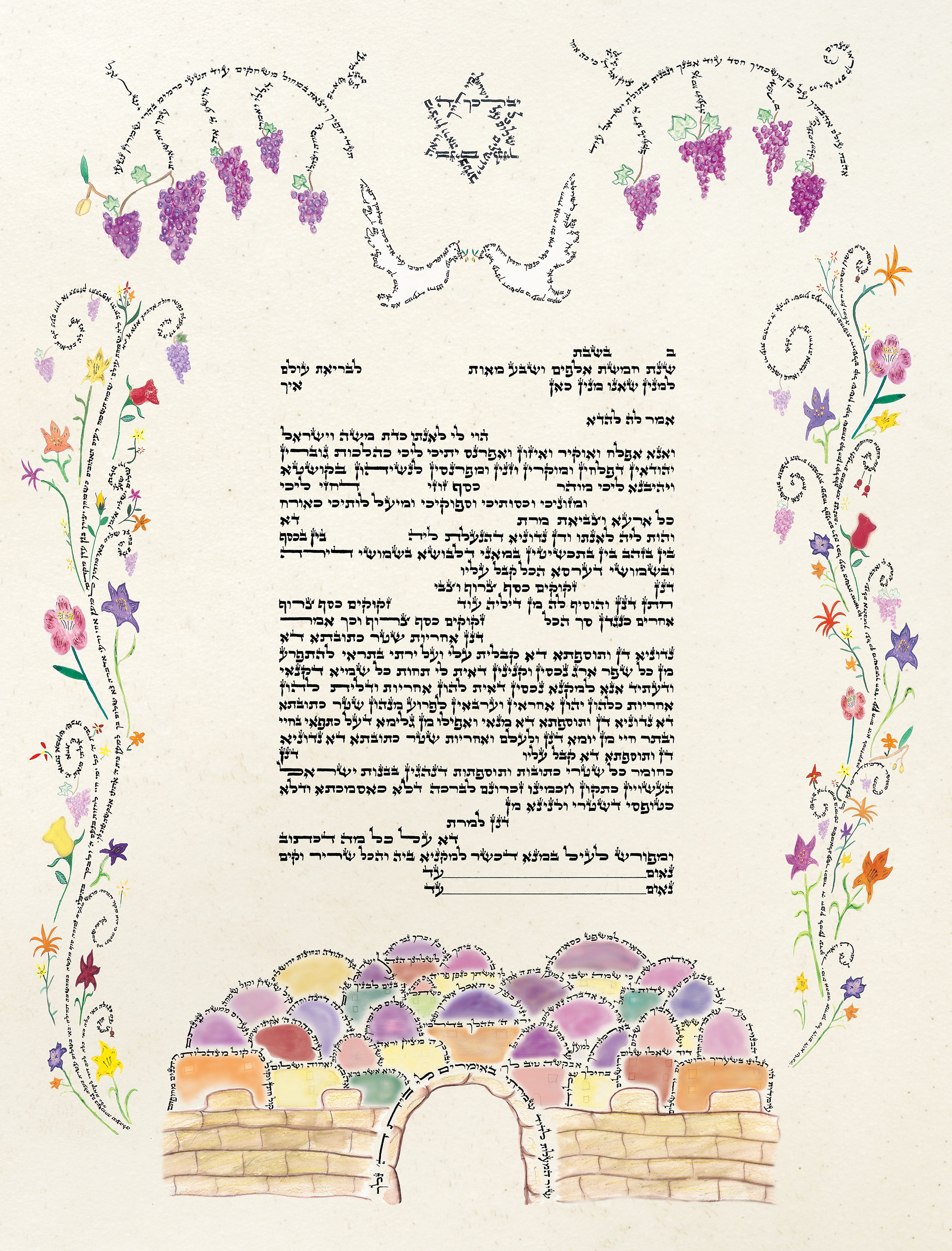
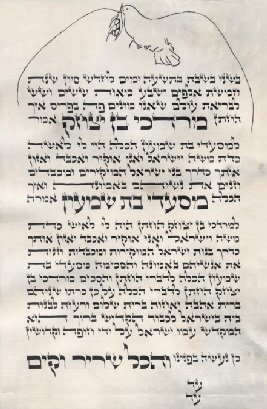
Hand-written ketubah with a dove motif by sofer Mordechai PinchasHand-written ketubah built around a chuppah motif by sofer Mordechai PinchasHand-written ketubah with a Jerusalem motif by sofer Mordechai Pinchas

Mordechai Pinchas

London, United Kingdom

Mordechai Pinchas, also known as Marc Michaels, is a London sofer STaM who writes and repairs Torah scrolls, tefillin and mezuzot, and holds a Cambridge doctorate in Jewish manuscripts. He conducts his scribal work according to Orthodox halacha and writes ketubot on paper or parchment, plain or illustrated, for communities across the spectrum.

Orthodox textTraditionalJerusalem & LandscapesMinimalist
Blooms ketubah with an illustrated floral garden border from TchotchkePapercut-style ketubah in white with cut geometric frame from TchotchkePaper Star ketubah with a modern star motif from Tchotchke

Tchotchke

United States

Tchotchke commissions original ketubah designs from illustrators and designers, then prints them to order alongside its Judaica range. Text options run from Orthodox and Conservative through Reform, egalitarian, interfaith, same-sex and non-binary wordings, or a couple's own.

Orthodox textModernMinimalistUnique & Alternative$$
Destiny ketubah with contemporary abstract artwork by Micah ParkerDaybreak ketubah in warm gradient color by Micah ParkerColtrane mid-century modern ketubah with geometric shapes by Micah Parker

Micah Parker

United States

Micah Parker has been making fine art ketubot since the mid-1990s and was among the first to bring digital art and archival printing to the marriage contract. His Ketubah Studio collection spans mid-century modern, abstract and playful designs, with a wide set of text options.

Orthodox textModernMinimalistUnique & Alternative$$
Infinite Love ketubah with interlocking painted rings by Nava ShohamThe Rainbow Tree ketubah with a brightly painted tree by Nava ShohamAhava Coral ketubah in warm coral tones by Nava Shoham

Nava Shoham

Montclair, United States

Nava Shoham paints the artwork behind 1-800-Ketubah, working in bright, saturated color across trees of life, hamsas and floral wreaths. Designs are offered as fine art prints with a wide range of text options.

Orthodox textFloral & BotanicalModernWatercolor
Sculptural ketubah with two entwined bronze-toned figures before the text by Timeless KetubahSculptural ketubah with a handmade tree of more than a thousand leaves by Timeless KetubahSculpted couple dancing in front of a framed ketubah text by Timeless Ketubah

Timeless Ketubah (David Master)

Brooklyn, United States

Timeless Ketubah is the Brooklyn studio of sculptor David Master, who stands the ketubah text behind a cast sculpture of two figures or a tree, or engraves it into wood, so the piece sits on a shelf rather than hanging. The text options include the traditional Aramaic, a Conservative text with the Lieberman clause, egalitarian and interfaith wording.

Orthodox textUnique & AlternativeModern
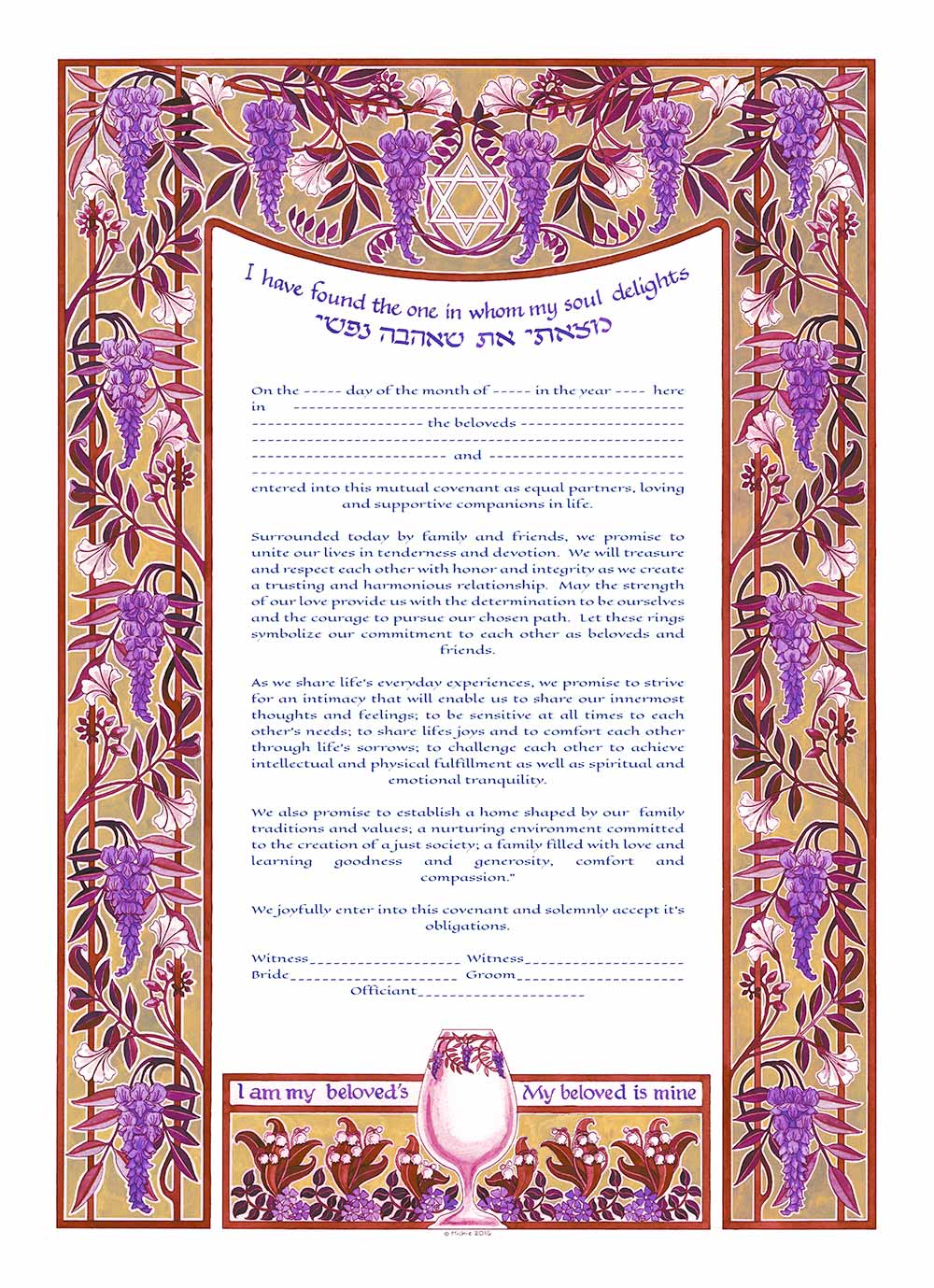
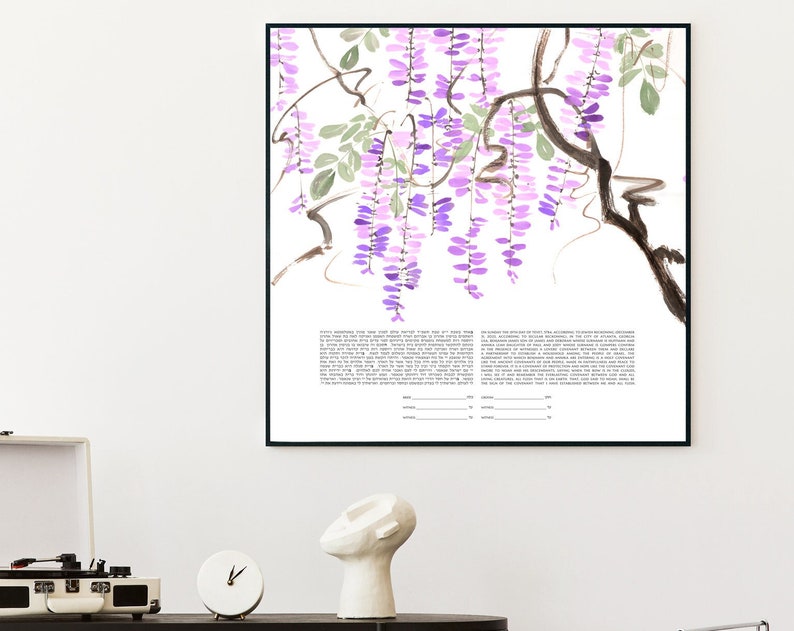
Ketubah with a botanical greenery wreath by Elena BerloMinimal ketubah with a plain gold frame by Elena BerloKetubah with purple wisteria garlands by Elena Berlo

Elena Berlo

New York, United States

Elena Berlo designs ketubot under the name Once Upon a Paper, working in botanical wreaths, wisteria garlands and clean gold frames. Texts are set to order and printed, with rush production available for short engagements.

Orthodox textFloral & BotanicalModernMinimalist
Their work

Ketubot from these artists

Tap any piece to meet the artist.

FAQ

Orthodox ketubah questions

What makes a ketubah suitable for an Orthodox wedding?

The text, not the art. An Orthodox ketubah uses the traditional Aramaic wording, records the groom's obligations and the ketubah sum, and is signed by two kosher witnesses who are not related to the couple or to each other. The design around it can be anything the couple and their rabbi are comfortable with.

Can an Orthodox ketubah be printed, or must it be handwritten?

Printed ketubahs with the names, date and place filled in by hand or by the artist are standard in most Orthodox communities. Some couples prefer a fully handwritten text by a scribe. Either way, the rabbi who arranges the kiddushin checks the filled-in details before the signing.

Do I need an Ashkenazi or a Sephardi text?

Follow the groom's family custom and your rabbi's guidance. Ashkenazi and Sephardi texts differ in some wording and in how the sums are written, and Chabad, Moroccan, Yemenite and Italian communities have their own details. Tell the artist which version you need before they letter or print it.

Should the ketubah show people or figures?

Many Orthodox couples choose floral, Jerusalem, geometric or papercut designs and avoid human figures, but there is no single rule. If it matters to your community, ask your rabbi and pick a design to match.

Who fills in the names and the date?

Usually the officiating rabbi or a scribe completes or checks the Hebrew names, the Hebrew date and the location, because errors here matter. Send the artist the details your rabbi gives you, and ask for a proof before printing or lettering.

How did you decide which artists offer an Orthodox text?

We only mark an artist when their own website lists an Orthodox or traditional Aramaic text option, or states that their ketubot follow halacha. It is a starting point, not a certification: your rabbi has the final word on any ketubah.

We mark an artist as offering an Orthodox text only when their own site says so. It is not a kashrut certification: always confirm the final text with your officiating rabbi.

Are you an artist who letters Orthodox ketubot?

Tell us about your work and we will take a look.

Submit your work